
CCFG autumn visit to Coed Fron Drain and Bwlch y Mynydd
Morning
On the 7th of October 2023 members of the CCFG gathered at Coed Y Felin carpark to spend an enjoyable day with our hosts Jonny Hulson and Phil Morgan. The day was to be split into two visits. First on our schedule was Coed Y Felin (North Wales Wildlife Trust) and Coed Fron Drain (privately owned mixed farm woodland designated as PAWS). Across these two adjoining - and very different – environments, a marteloscope has been installed for training farmers and forestry students in single stem selection.
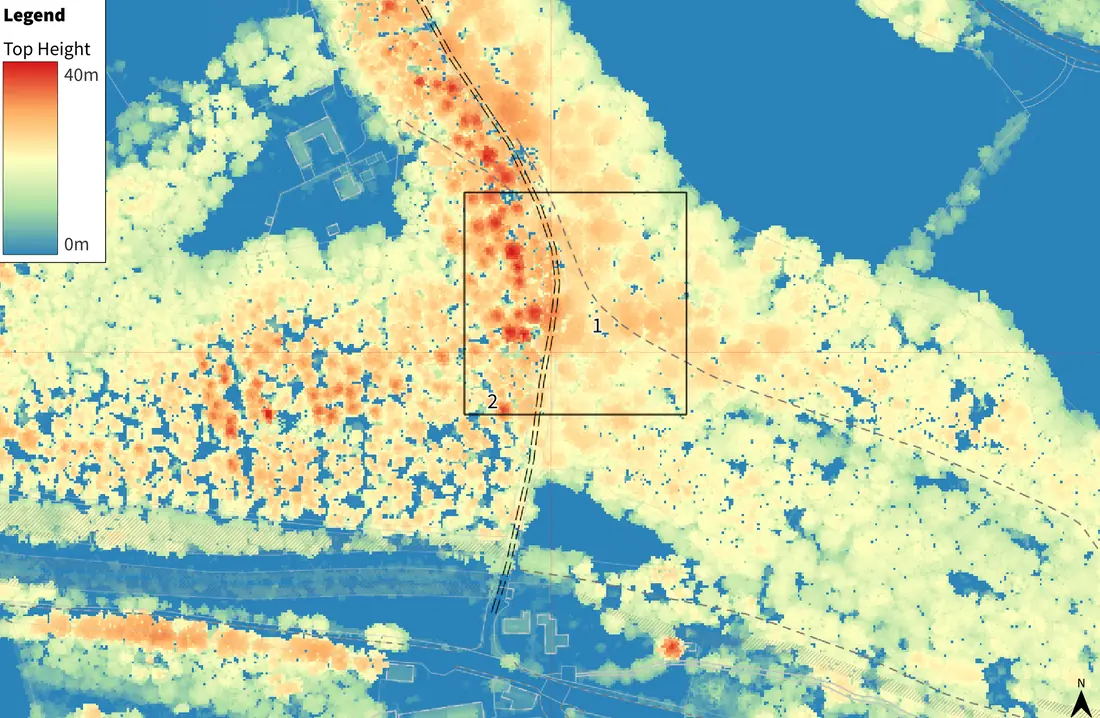
Coed Y Felin on the East (right) of the above map is an ancient oak/ash woodland, with planted sycamore, beech and sweet chestnut. We spent some time within the marteloscope site, learning about the purpose of this technique and the history of this specific location. The marteloscope in this location is placed strategically across two environments, broadleaves over limestone (Fig. 2) and conifers over sandstone (Fig. 4).
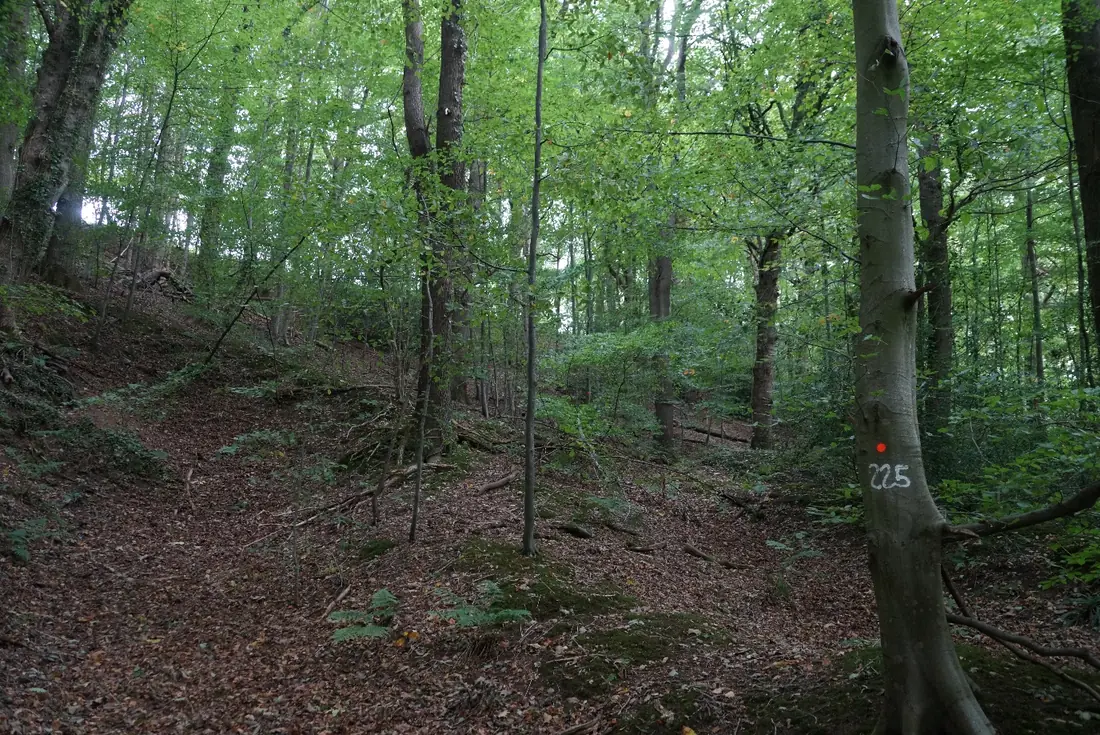
A ‘marteloscope’ is a 1-hectare training plot used to help train single stem selection techniques. The EFI (European Forest Institute) explain ‘The term is derived from the French word for tree selection (‘martelage’) and the Greek term "skopein" (look), meaning literally “having a closer look” at a tree selection’.
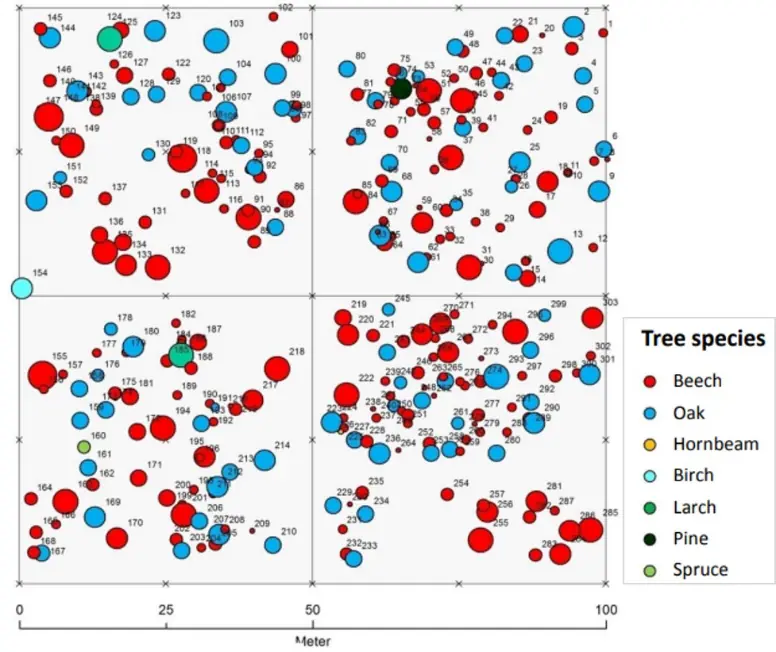
In a marteloscope, all stems are mapped out. Species, location, diameter at breast height and timber quality notes are initially recorded by an experienced practitioner. They are then plotted onto a map (see the inset stem map in Fig. 1) These measurements are used by specialist software to calculate and display additional metrics. Trainees are tasked – often Fig 3. Example marteloscope Stem Map
in pairs – to propose stems for removal. The trainee’s selections are fed into the software, which calculates the effects of the proposals and returns results, allowing the candidates and practitioners to review their performance and offer valuable insights.
The eastern broadleaf section of the marteloscope area consisted of Oak, Beech, Sycamore, and Sweet Chestnut. As this section is used as a training area for selective stem removal, it follows that this section has been denied a thin, and is considered to be too densely populated. In fact, basal area calculations showed 45m2/hectare – a shady condition likely to stifle regeneration of all but the most shade tolerant of species (in this case Beech).
It was encouraging and educational to witness debate regarding the various approaches and opinions of the members. One topic of interest concerned whether it was more appropriate to open canopy gaps now, or thin the understory and return in 4 years. Silvicultural considerations included maintaining the stability of the woodland versus allowing enough dappled light to the floor to regeneration. Owner’s objectives, target regeneration species and site sensitivities also factored into the discussion.
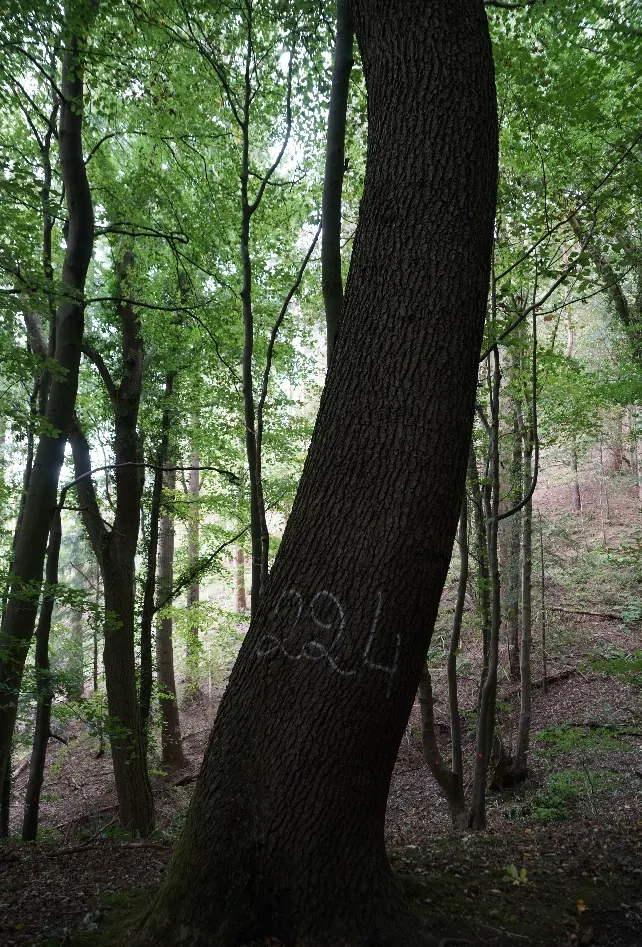
One stem on this site was of great interest – a naturally curved, large diameter Oak. Opinions ranged between keeping it for structure, versus exploiting a profitable interest from a boat-builder for the naturally curved timber.
Following this discussion, we walked a short distance to the conifer side across a drove road which acted as a natural boundary and a useful access route for timber extraction. This drove road runs North-South, dividing the Eastern broadleaved section and the Western Conifers (Fig 1.).
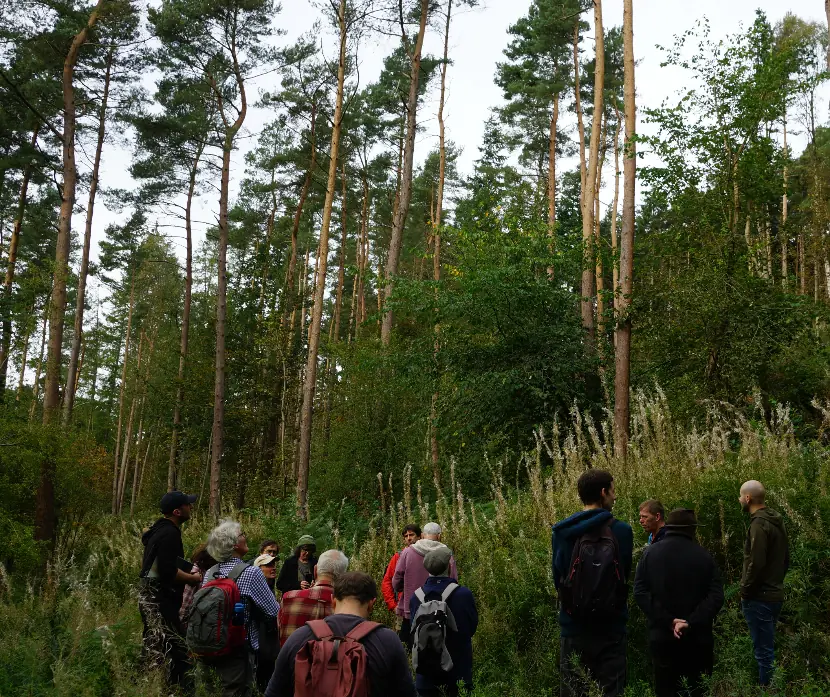
Our second stopping location demonstrated a very different forest type. Dominated by Scots Pine, with some Larch and Douglas, Coed Fron Drain has recently had second thinning with enrichment planting allowing our hosts to discuss appropriate management in this contrasting environment.
The thinning here was undertaken following a sample marking with the contractor and focussed on removing over-sized trees and phytosanitary interventions due to the presence of Dendroctonus micans.
The area had been underplanted with a mixture of Scots pine, Sessile oak, Hazel and Field maple.
A discussion regarding the use of cattle or pigs for ground vegetation control was started. There is evidence from other European countries, that if timed properly with the right number of animals, there are increased levels of natural regeneration due to beneficial light scarification of woodland soils and natural fertiliser from dunging. . Cattle and pigs will eat and trample pernicious vegetation such as bramble, willowherb and bracken, which also results in the germination of woodland ground flora and shrubs. Traditionally, animals were driven into farm woodlands for protection from the elements, with Holly being an important source of fodder in the winter months due to its high protein content, but is now commonly a problematic species due to its shade tolerance and the lack of herbivores in Welsh woodlands.
Turning our attention to the scattered larch, a discussion began regarding Phytophthora in the locale. It was explained that no instances have been seen at this site or nearby, and there are no imminent plans to proactively remove it. As an offshoot of this discussion, a point was raised noting the different ways in which Phytophthora ramorum and Hymenoscyphus fraxineus (Ash dieback) are treated at policy level. They are both widespread, introduced diseases threatening common UK trees – so why does Pytopthera result in statutory plant health notices, when Ash Dieback does not?
The answer appears to lie in the invaders themselves, particularly the ‘water mould’ Phytophthora ramorum. The genus name Phytophthora itself suggests trouble, and is said to derive from the Greek φυτό (phyto), meaning ‘plant’ – plus the Greek φθορά (phthora), meaning ‘destruction, ruin’. This fungus-like pathogen has shown much greater tendency to morph and mutate into forms that can attack other species, and thus poses a greater risk. A wider discussion developed on the important role of silviculture in enabling monocultures to adapt to the threats of climate change and increase their resilience to pests and diseases, and also the changes in the European Union with regards to the disease now being regulated as a non-compliance pest, meaning it is not a mandatory requirement to fell larch trees to control the disease.
The Woodland Trust lists English oak, sessile oak, sweet chestnut, larch, beech, sycamore, horse chestnut, cherry, ash and birch as being potentially affected species. According to Forestry England, ‘This means that infected plants that are releasing spores, such as larch trees, should be felled or otherwise killed as quickly as possible after detection of the disease. Trees that can be coppiced such as sweet chestnut must be felled and killed at the stump to prevent regrowth.’
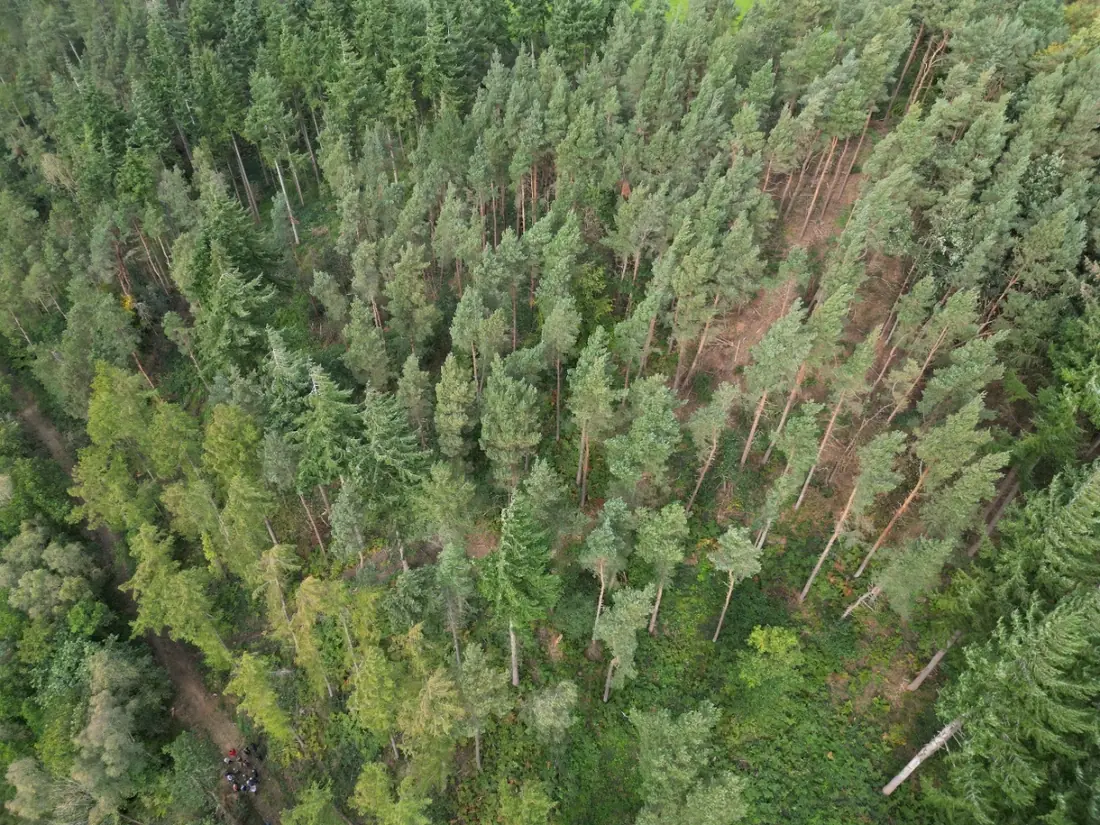
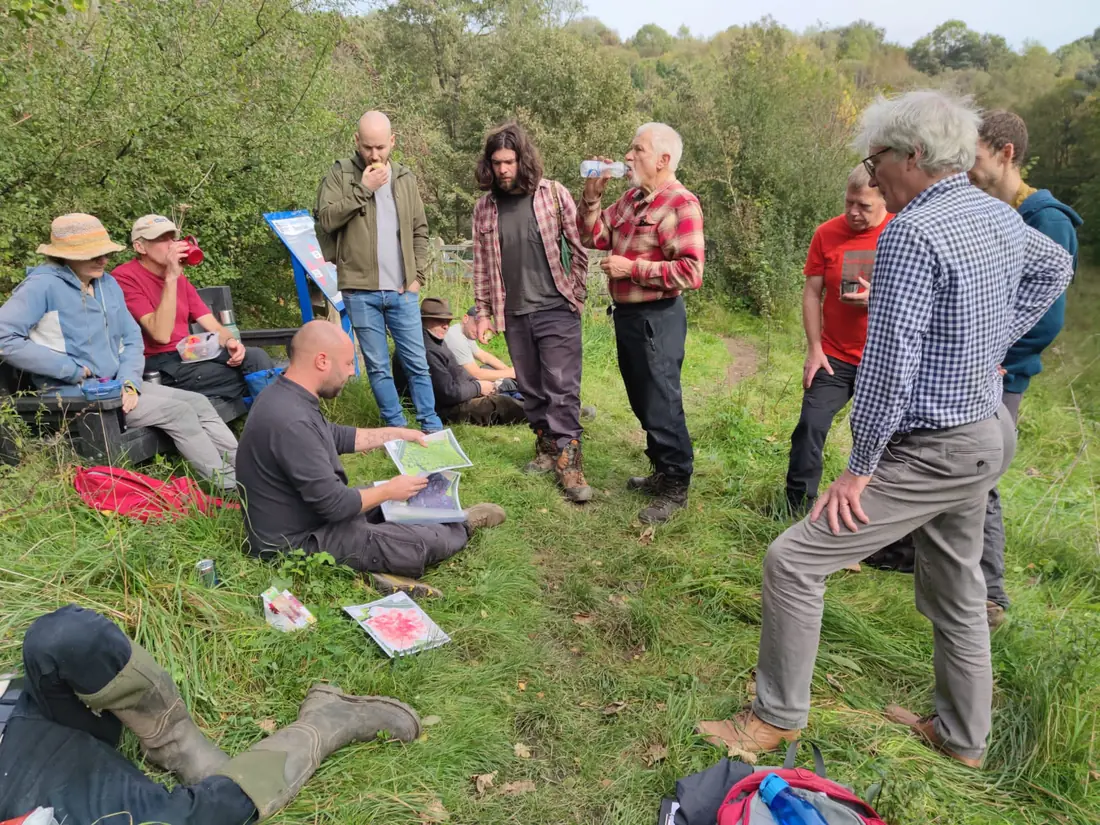
Just before lunch, we were briefly able to launch a drone to view the western conifer stand from above (Fig 4). The hosts and members were impressed by this novel demonstration of new technology, and a wide range of use cases were suggested by the members. The discussion carried on during our lunch with some examples of the data that can derive from woodland drone scans and a discussion about their application to CCF.
Afternoon
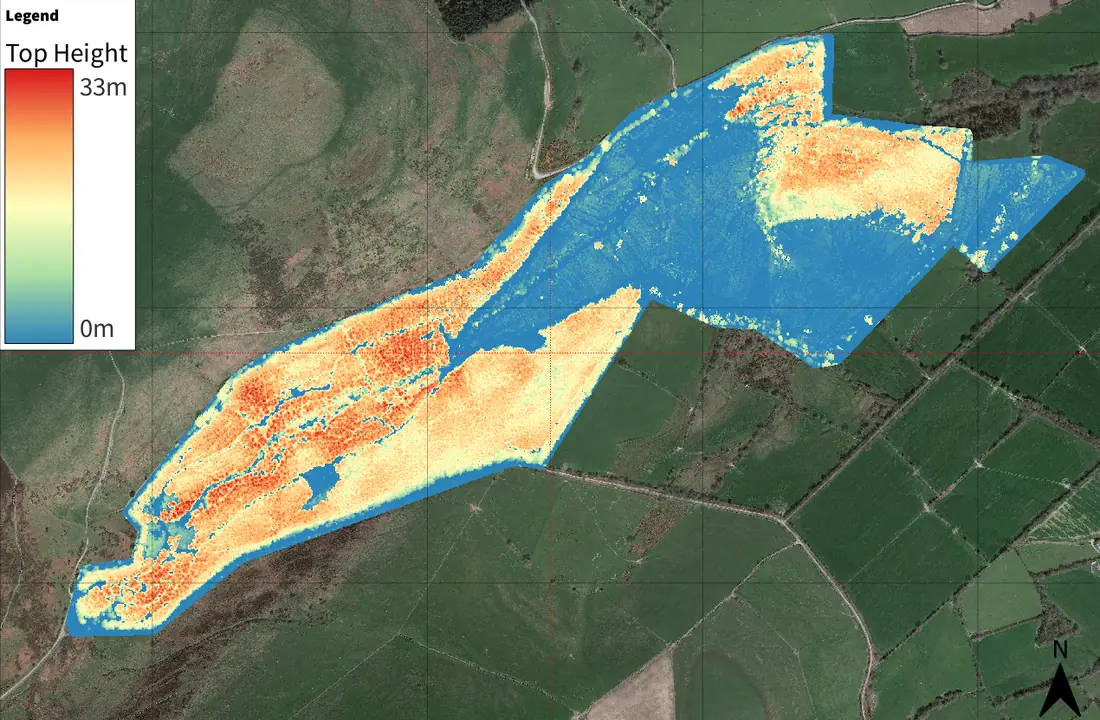
In the afternoon, we visited a larger private forestry estate with compartments of monoculture plantation Douglas fir, Sitka spruce and larch, regenerating cherry with some areas of PAWS with remnant broadleaves. An ISN research stand has been established in one of the compartments having a thinning history. The owner is considering different options to transform the plantation to continuous cover forestry management.
Entering the site, our vehicles were greeted with a pleasant view and smooth forest road (designed in-house by the owner Richard Ceen), winding down the hillside. To the south-west is a plantation of Douglas Fir. This young section is one of those sections on site being targeted for CCF as it develops. We arrived at a section of neatly quarried hillside hosting a growing firewood processing facility. This facility is being developed by Benjamin Ceen, who along with his father Richard, kindly hosted our afternoon session. Benji explained his vision and how the site had benefitted from infrastructure investments, and how one of his future planned investments was an on-site mill to maximise potential for added value forestry products.
We then decamped along the forest road towards the western end of the site, where we were treated to an explanation of the implementations of CCF using the areas surrounding the group.
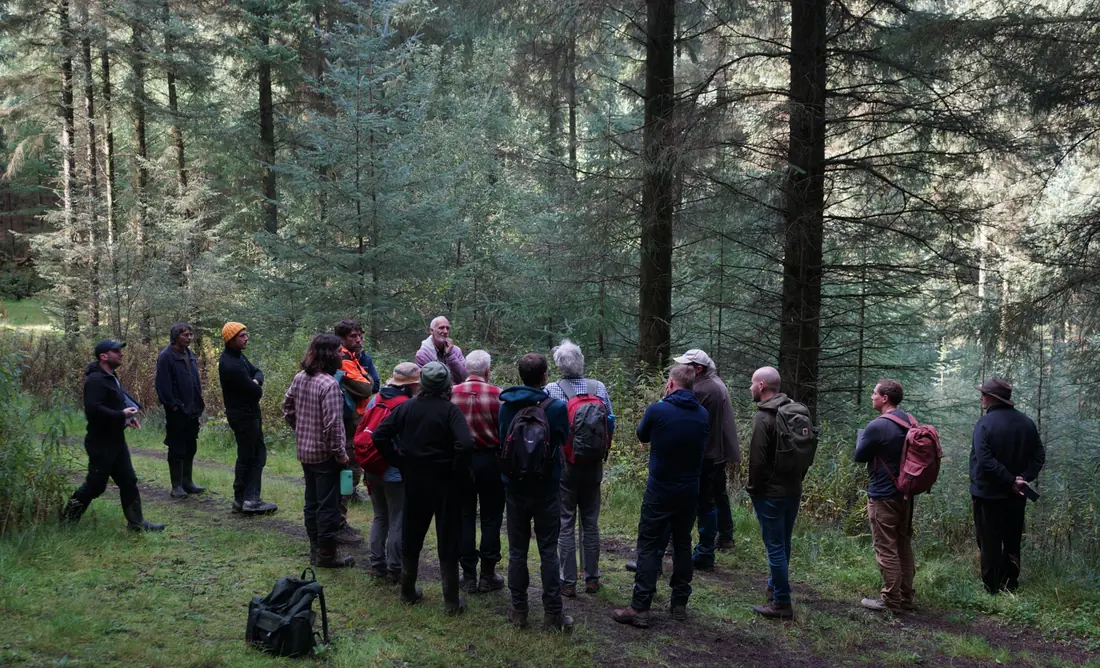
One topic raised – which was received with good natured shock and scandal – was the question of ‘how much measuring is needed?’ when implementing CCF. There were a range of opinions, although weighted towards the ‘very important’ end of the spectrum.
Another questioned: ‘How can we simplify the way we describe CCF, to help promote CCF practices to managers feel confident in implementation on their woodlands?’. CCF conversations can, like many aspects of land management, tend to meander, particularly when one is interested in the topic. How might CCF advocates – to paraphrase the discussion – communicate an entire field of study in the simplest way possible, or is it better to rely on a broader term that has been adopted by Pro Silva Europe, ‘close to nature forestry’?
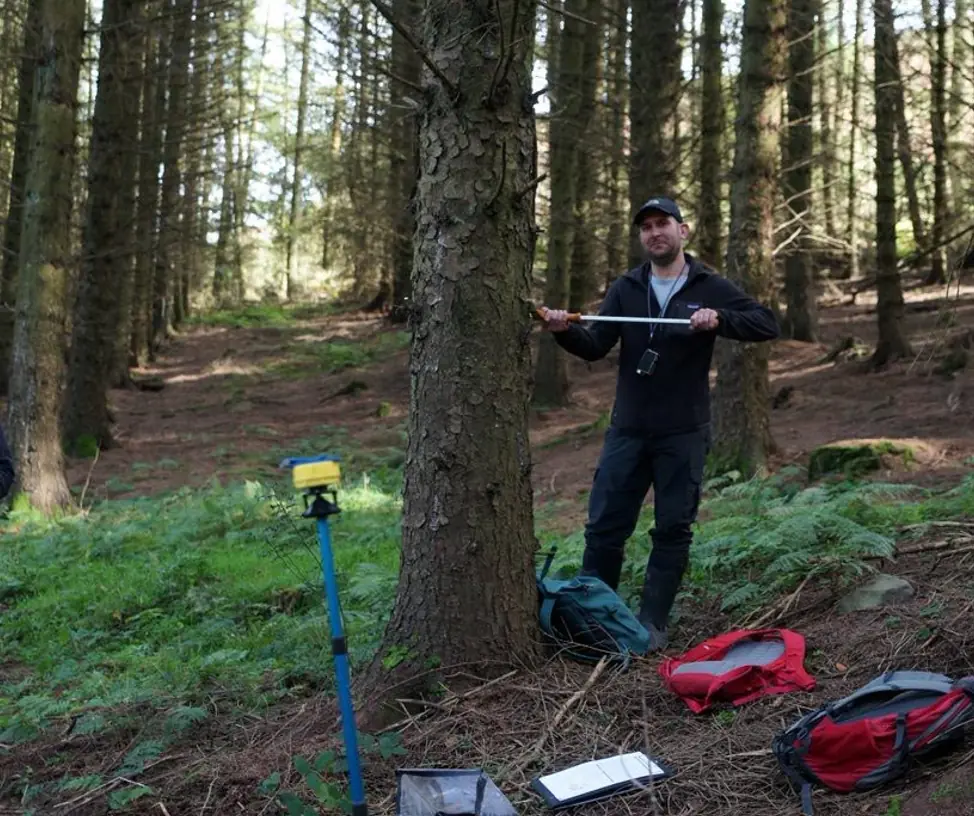
We were then treated to a demonstration by Phil and Jonny of how to measure a variable plot based on a Basal Area Factor (BAF) of three, following the AFI Plot Protocol [1]. In this operation, ultrasonic equipment named ‘DME distance measuring kit’ (example provider: Haglof) is used to wirelessly determine distances, and trunk diameters are measured using calipers. To determine whether to include a trunk in the sample, one would employ the equation:
Units are disregarded. As an example, we can consider the following situation seen in the demonstration:
We can see that the value of 36 is indeed less than the perpendicular diameter, the equation is true and hence we would include this stem. It was also noted that, when analysing sample plots, you could make observations concerning quality, vitality and social position.
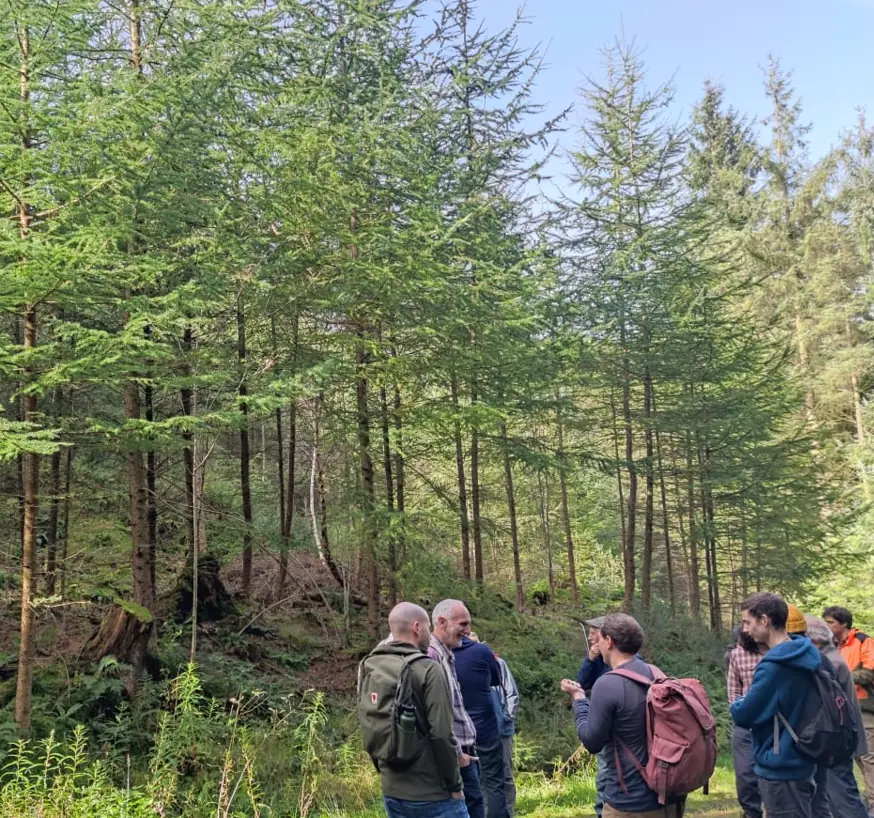
Following this technological teaching, we moved further down the site to peruse some respacing performed by Benji, our host. We looked at the methods he used to perform the respacing, his considerations during the operation, and any learning he had for those who might be considering their own first spacing attempts. Benji’s advice – watch out for bees, wear the right PPE and just get in there! There is no replacement for hands on experience, and foresters are always learning. The benefit of learning from a small mistake early in your CCF journey can pay dividends as your crop – and hopefully hectarage – grows!
We concluded our visit with some time for free discussion, many handshakes, and our deepest thanks to our hosts and guides. We hope they had as much fun having us as we did being welcomed!
[1] Susse, R.; Morgan, P.P.; Association Futaie Irrégulière. Management of Irregular Forests: Developing the Full Potential of the Forest: Economic Aspects, Environmental Aspects, Social Aspects; Azur Multimedia: Saint-Maime, France, 2011; p. 144.
Written by Jamie Brookes for Continuous Cover Forestry Group. If you would like to discuss survey work on your own ground, get in touch.