
CCFG autumn field visit to the Forest of Dean
Introduction
Our visit was hosted by James Williams, the Area Forester for an expansive portion of the Forest of Dean. Covering 10,500 hectares, this ancient forest is recorded as a Royal hunting area prior to 1066, remaining as a forest and source of natural resources throughout the last millennium. Currently, the forest has a roughly 50/50 split between conifer and broadleaves, with a view to move towards 60% broadleaved coverage. This visit concentrated on viewing Douglas fir (managed under various continuous cover systems), with a final stop at some underplanted Corsican pine.
There is generally low windblow risk in the forest, making this a good site for CCF transformation. While significant areas are already under CCF and more are proposed, conifer areas affected by Phytophthora are mostly clearfelled and replanted. Due to squirrels compromising all broadleaf CCF management a policy of retaining all existing stands and only thinning is in place, accepting regeneration whenever it occurs. Although Pine Martens have recently been introduced to the forest (and Goshawks inhabit the area), there is no measurable impact on grey squirrel numbers yet.
Site 1: Mature Douglas Fir
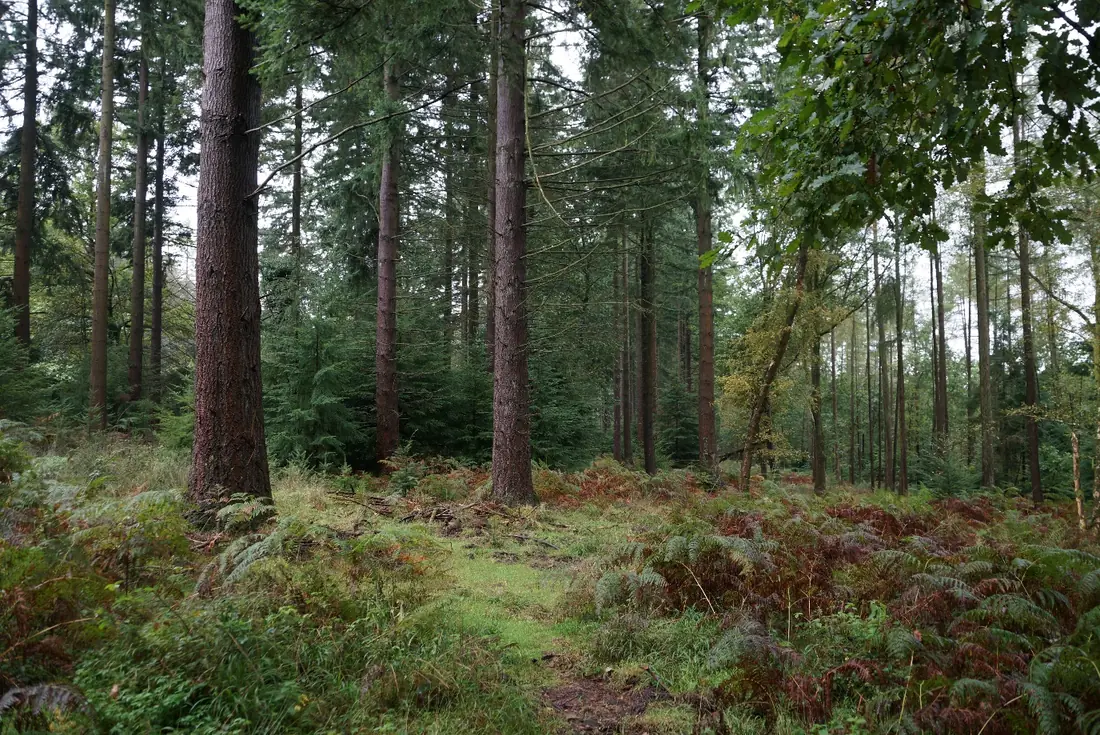
Our first stop was a mature stand of predominantly Douglas fir (DF)managed as CCF. It has brown earth soils, with some gleying and a significant clay content. The long-term objective of this area is to produce an irregular stand producing quality DF, with ideally at least three main canopy species – including Western Red Cedar (WRC) and Coast Redwood (RSQ).
Thinning in 2017 removed some mature DF, and some large WH, resulting in several gaps roughly 30m in diameter. Groups of DF were hot planted in the gaps, at 1.9x1m spacing, within the groups, with a total number planted of 2000 trees/hectare. Gaps in the canopy of the size created by the thinning favour DF over WH due to the light levels reaching the forest floor (coupled with the downside that this level of sudden light exposure can also bring an increased risk of Bracken and Bramble! At the same time as the thinning operations, existing WH regeneration was also respaced by chainsaw. The DF is being hand weeded to supress bracken during its establishment.
The next planned intervention is in two years, aiming to reduce the WH competition. Despite WH growing voraciously here, concerns regarding Phytophthora pluvialis susceptibility and diversification in the face of climate change, the decision has been taken to intervene to prevent WH domination of the stand. There were discussions and a range of opinions, including total WH removal - to favour other species and control regeneration.
Discussions of site infrastructure and contractor management were held. James discussed cutting and maintaining permanent extraction racks, and planting groups next to the racks for easier access – a ‘chequerboard’ approach.
Managing contractor operations can be an issue with those not familiar with CCF goals. The Forest of Dean has moved away from standing sale contracts to predominantly multi-year direct production contracts. This allows closer working with the contractors, a deeper level of trust and is yielding good results. A better job is preferred over out-and-out price competitiveness. James explained how one contractor has attended a CCF course and how that familiarity has led to increased confidence for both parties when outlining and conducting operations.
At this stage, we moved on to the second site.
Site 2 – Irregular Shelterwood
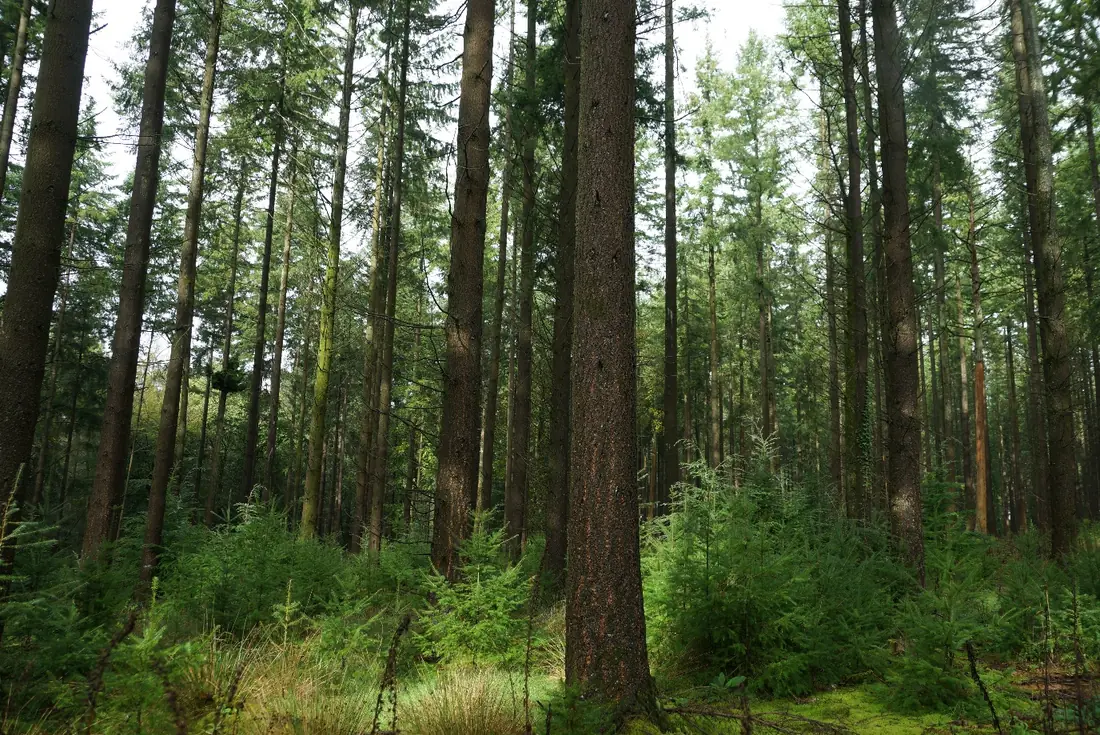
The second site featured a conventionally thinned DF stand (with permanent extraction racks cut last year), which is developing an irregular shelterwood structure due to natural regeneration. The plan is to keep the basal area at around 30-40m2/hectare to favour DF regeneration, avoiding too much shelter which will favour WH.
The area visited bordered an immature Larch compartment (P2008). As can be seen in Fig 2, this allowed side light (and some overhead dappled light) to support the DF regeneration. The intention is to enrich and support the existing natural regeneration of DF and underplant with Japanese Red Cedar (JRC), WRC, and RSQ. (The underplanting is not protected but seems to be getting away with minimal browsing damage, in contrast with many of the clearfell and restock sites in the same area
It was noted that one diagnostic for adequate light levels for an understory of DF is the leader/lateral shoot ratio – if the leader is longer than the first lateral shoots, then there is likely to be sufficient light available.
The aim for this stand is to return regularly to gradually remove the overstorey and release the regeneration and underplanting, depending on the development of the young trees. Selection criteria would be to focus on positively affecting the understory, rather than a strict focus on the quality of crop to be removed. Other decision factors will include ground vegetation, location of infrastructure (racks) and retention of marked seed trees.
A question was raised regarding the reduced stocking and its effect on harvesting rates. The evidence seemed to be that although there was reduced numbers of stems coming out, the larger stem volume made processing quicker, allowing operations to be kept cost effective. It was also noted that the direct production contracts are priced on the tasks the job requires, not on overall volume.
Another aspect to bear in mind is that the Forest of Dean works relatively large areas, so it can achieve economies of scale. A lower yield in one block is not a critical issue if the machinery is already on site working adjacent areas.
Site 3 (Next to site 2)
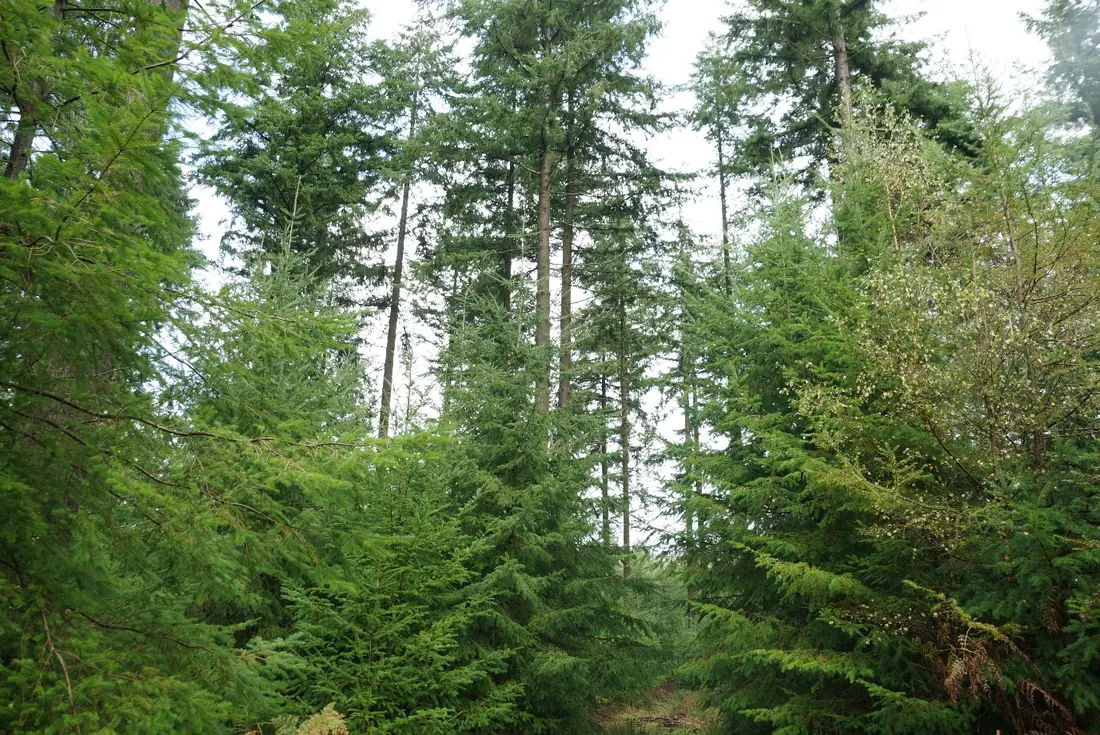
A short walk away we stopped at a third site containing predominantly DF, under a mixed strip shelterwood system (A comment was that it might better be called overstorey removal – retaining seed trees). A higher number of seed trees were being retained on the windward edge to carry seed into the stand. Outside of the cleared strips, thinning was tailored to the intensity of regeneration. Heavier thinning being conducted where more regeneration was present, again to promote light conditions favouring the DF. Respacing had been conducted after thinning which helped create some access for future operations, but the understory was still making access and visibility difficult for thinning operations.
A comparison of costs was discussed. James’ experiences estimate roughly £1000/hectare to restock an area by direct underplanting and with some mechanical weeding. Costs for fencing and chemical weeding have been eliminated at this site. (A discussion of browsing protections occurs at the end of this report). This can be compared to a recent £3000/hectare cost for comparable clearfell restock. It was noted that harvesting costs were higher in areas with considerable regeneration – mainly due to slower production and increased structural complication.
A question was asked regarding landscape scale productivity and the freedom of the forester to make individual decisions: James’ beat currently generates around £1.2m of timber income per annum, with a recent assessment that the 21,000m3 removed last year closely matched the estimation of the volume accrual.
It was explained that the Forest of Dean timber production is best considered to be one part of a larger national estate delivering timber to the national market. While there are annual fluctuations, these are usually balanced out across the wider estate. This results in more freedom to do what James thinks is right for a stand (and within the spirit of the 10-year Forest Plans), rather than being excessively pressured to just generate income from it. It also helps to have a supporting management and overall organisation! Having a large area like the Forest of Dean also gives more opportunity for a varied approach than on isolated, individually owned small stands.
Site 4: Partial removal of infected Corsican Pine (CP) and underplanting of shade tolerant conifers.
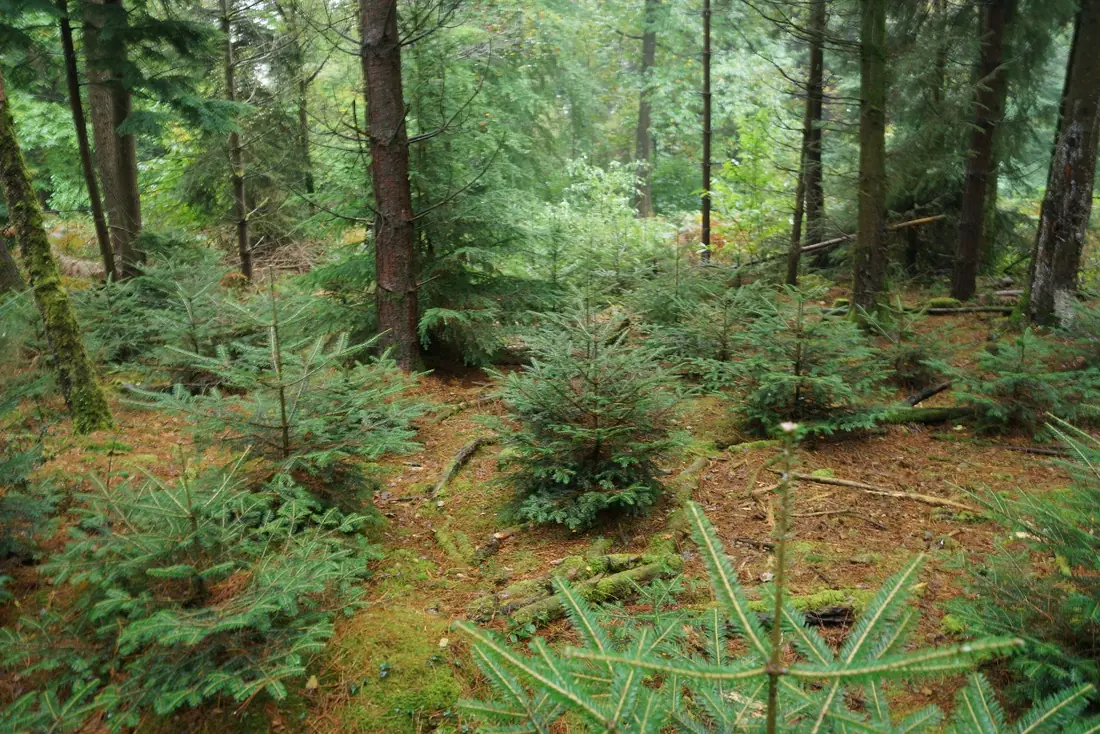
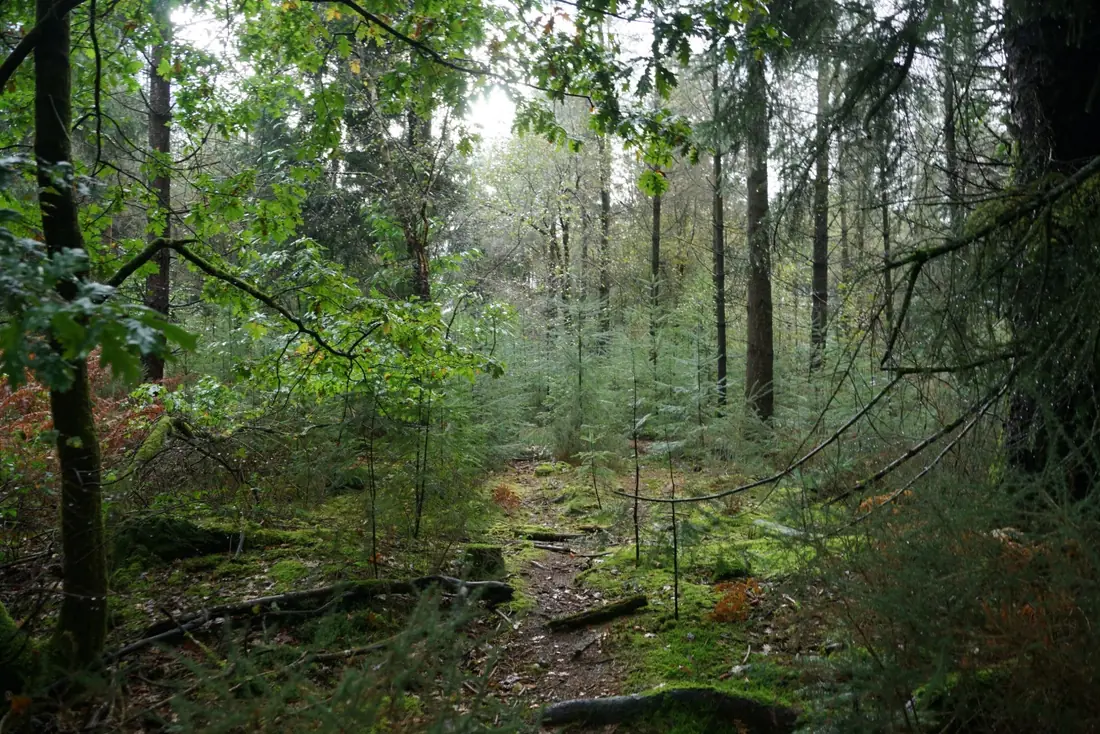
This stand was thinned conventionally, with approximately 50% of the crop removed. After thinning was completed in 2017, every other rack and some of the matrix was underplanted after scarification. Species planted included DF, WRC, RSQ and European Silver Fir (ESF) at a 1-1.5m spacing. Although again unprotected, deer issues are not presenting a huge problem – the ESF has been placed near to public paths to use high levels of public access as a deer deterrent, to date this has worked with very little if any browsing damage having occurred. It was noted that the overstorey here is retained primarily for the benefit of the next generation.
The next harvesting intervention here will be by machines using the remaining unplanted existing racks, with some hand felling towards the racks to protect the regeneration if necessary. Some discussions took place over how to best continue the stand development, and when to remove all the remaining unhealthy pine that were alive but not significantly growing.
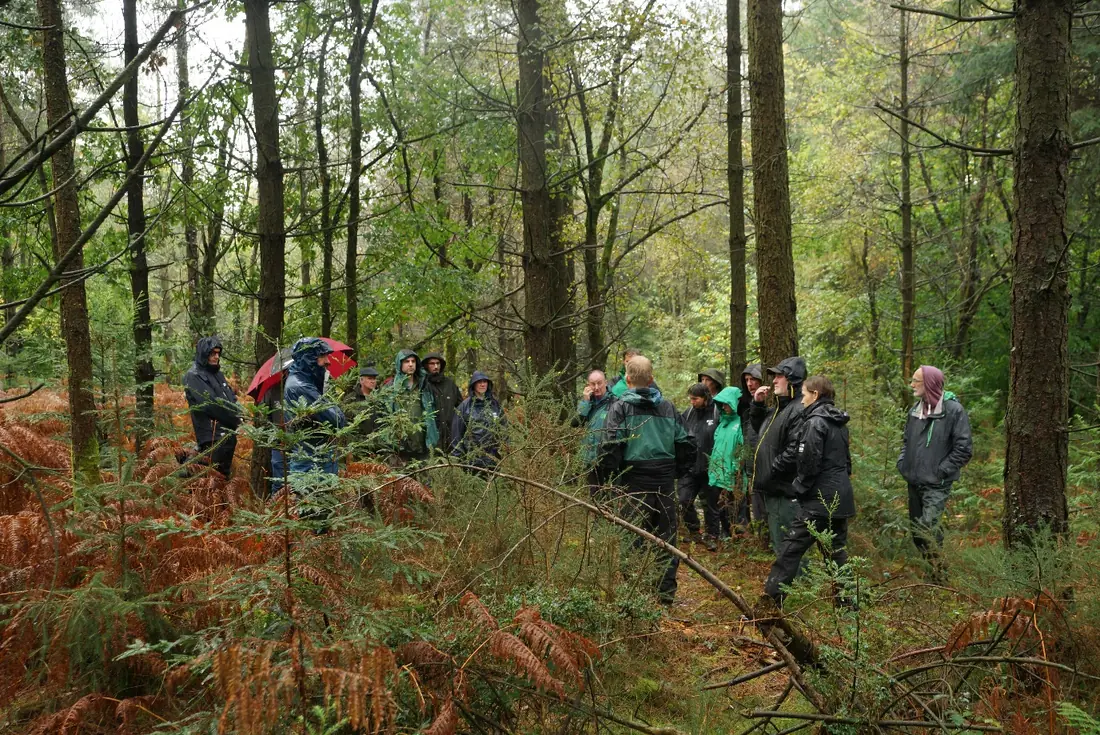
At the final stop, a short walk away from the previous, mammalian threats were discussed, particularly boar that are present in the Forest of Dean, which can be persistent, destructive and very difficult to fence out. (A recently underplanted site was discussed, in which many saplings had been lifted out by boar – not browsed, or destroyed, just lifted out! One commentator suggested this had been seen previously, but with hares as the likely culprit).
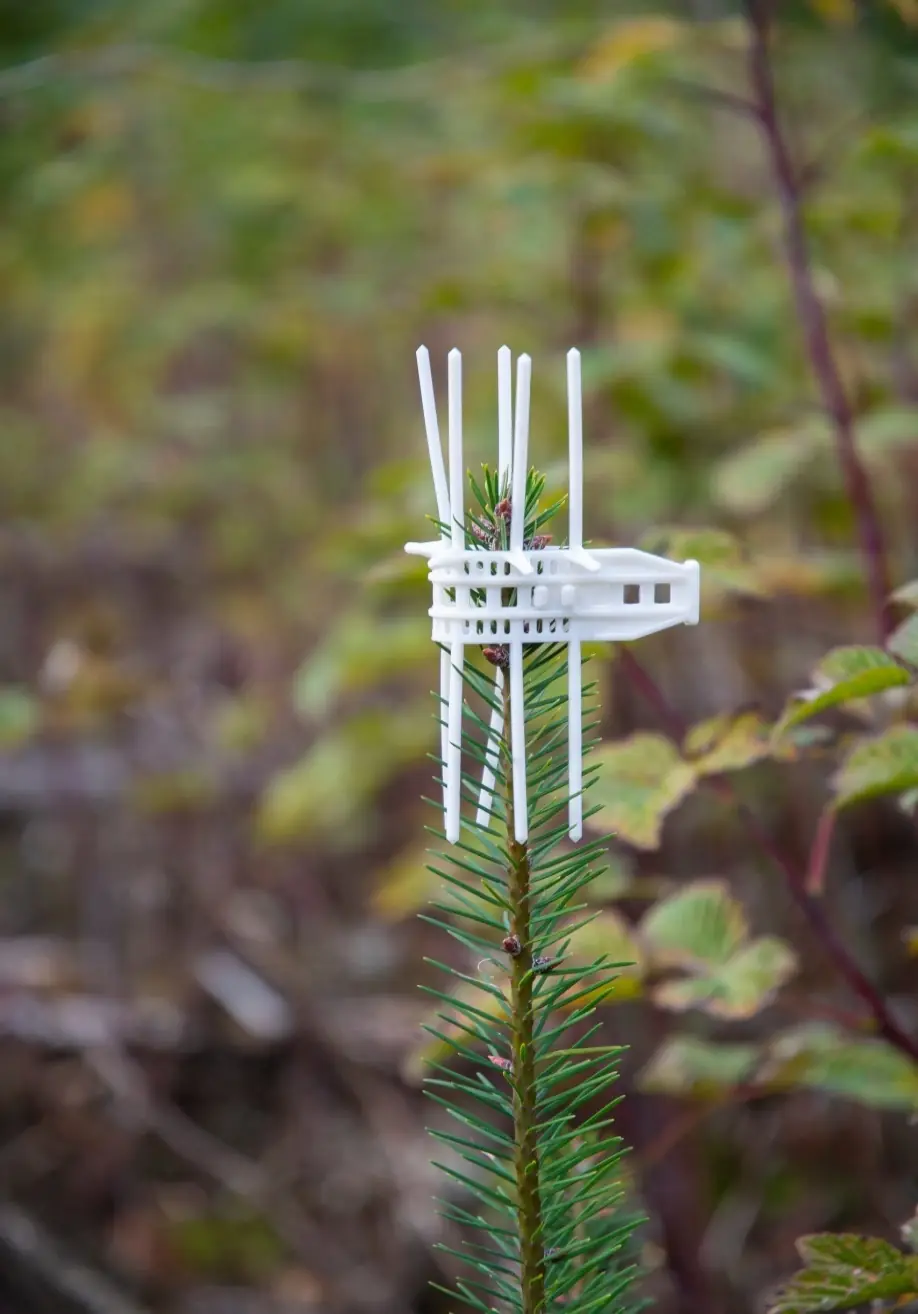
The use of ‘Trico’ – a sprayed substance containing sheep fat which is applied to leaders – was discussed and is the only form of protection used in the Forest of Dean on underplanted conifers. Generally, all trees would be sprayed, and this would generally occur straight after planting – noting that it could also be useful to apply at the end of the year to deter winter preying. However, at the stocking densities used here, and with the allowed application (20l/hectare/year), it was generally not possible to apply this twice in a year. One participant raised the possible use of reusable plastic protection guards - although these did need to be revisited and repositioned yearly, which resulted in this being very expensive option.
.
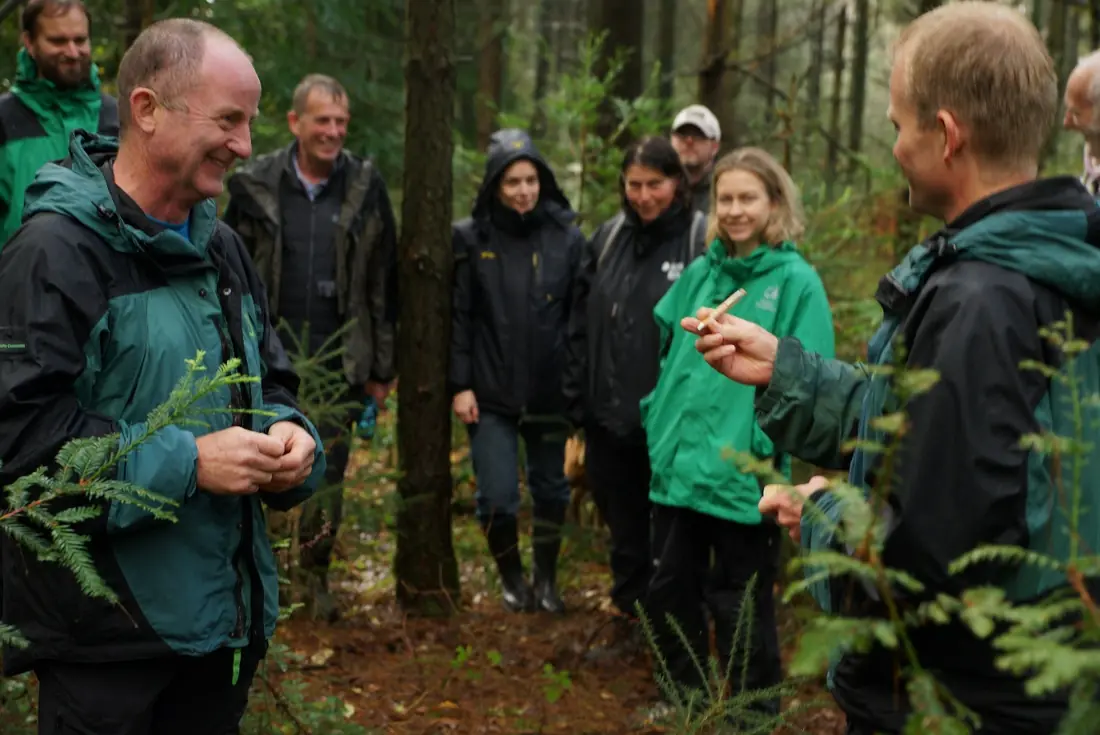
At the end of our visit, James was presented with a small token of thanks from CCFG, and a big round of applause from the attendees.
Great thanks go to James for his enthusiasm in adopting CCF and his detailed insights into the Forest of Dean’s approach.
Written by Jamie Brookes for Continuous Cover Forestry Group. If you would like to discuss survey work on your own ground, get in touch.